Why pricing varies so much in Savannah
Rodent control pricing in Savannah varies by an unusually wide range because the housing stock varies so much. A 1920s Ardsley Park bungalow with 95-year-old soffit returns, brick-pier foundation, and Historic District-adjacent restoration requirements is a fundamentally different job than a 2015 Pooler subdivision home with engineered trusses and slab foundation. Same problem (rodents), wildly different scope (materials, technique, time).
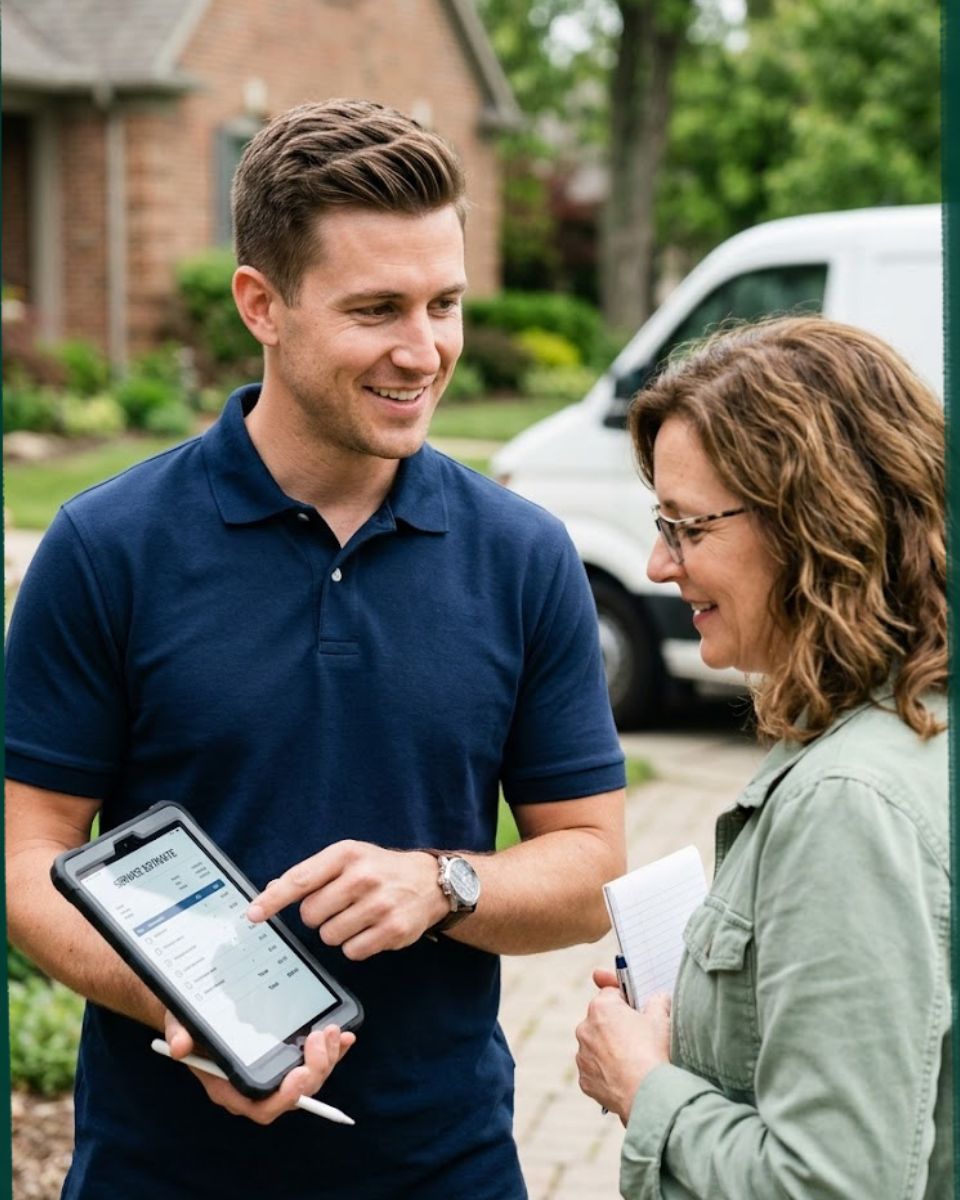
The other variables: infestation level (active vs. preventive scope), species (rats more expensive than mice typically), property size, and whether ongoing service is part of the package. Honest providers quote in writing after inspection rather than over the phone, because the actual scope depends on what the inspection finds.
Inspection-only pricing
Inspection-only service in Savannah typically runs $150–$400 depending on property size and turnaround speed. Standard residential inspection (under 2,500 sqft, standard 48-hour report turnaround) lands in the $150–$250 range. Larger or more complex residential inspection runs $250–$400. Rush turnaround for pre-purchase real estate transactions adds about $75.
Inspection-only is a separate service from treatment — useful for pre-purchase due diligence, insurance documentation, or when you want a professional assessment without committing to treatment. Many treatment providers bundle inspection into their treatment scope for free; standalone inspection means paying for the inspection separately but getting an independent opinion without upsell pressure.
Residential treatment — what most homeowners pay
Standard whole-home rodent program in Savannah ranges $700–$1,600 for typical single-family residential work. The wide range reflects the housing-stock variation:
- Modern construction (Pooler, Richmond Hill, Southbridge, post-2000 builds): $600–$1,100. Tighter envelopes, fewer entry points, faster work.
- Mid-century housing (Kensington Park, Magnolia Park, 1950s southside neighborhoods): $700–$1,200. Standard exclusion approaches, moderate technique time.
- Older established housing (Ardsley Park, Gordonston, Parkside, 1920s–1940s): $900–$1,600. Restoration-friendly techniques add cost; more entry points to address.
- Historic District and Mid-City Victorian District homes: $1,200–$2,500. Restoration-conscious materials (copper mesh, lime mortar) and hidden installation techniques; more time per property.
This pricing includes inspection, active rodent removal where present (trapping, in-home work), building-envelope exclusion sealing, follow-up verification visit at 10–14 days, and a 90-day exclusion warranty.
Specialty services — cleanup, dead rodent removal, insulation
Services beyond standard treatment are typically priced separately:
- Rodent droppings cleanup: $200–$900 depending on contamination area. Single-room cleanup at the low end; full crawl-space or partial-attic cleanup at the high end.
- Full attic cleanup & sanitization: $1,200–$3,500. Done after rodents are cleared. Larger attics with heavier contamination at the high end.
- Dead rodent removal: $250–$900. Accessible carcasses at the low end; wall-cavity removal with drywall cutting at the high end.
- Insulation replacement after rodent damage: $1.50–$5.00 per square foot installed, plus $0.75–$2.00 per square foot for removal of contaminated insulation. For a typical 1,500 sqft attic, expect $4,000–$10,000 total for full replacement.
- Rat nest removal: $300–$1,200 depending on nest location and access difficulty.
Commercial pricing — restaurants, retail, warehouses, healthcare
Commercial rodent control is typically priced as setup + monthly service rather than as a single project fee:
- Small restaurant or retail: $400–$800 setup, $150–$300/month ongoing.
- Mid-size restaurant or multi-unit retail: $700–$1,200 setup, $250–$450/month.
- Warehouse (under 50,000 sqft): $800–$1,500 setup, $300–$600/month.
- Large warehouse (50,000+ sqft): $1,500–$2,500 setup, $500–$900/month.
- Healthcare facility: $500–$1,200 setup, $200–$450/month. Compliance documentation included.
Commercial pricing typically includes monthly station service, written reports suitable for health department or third-party audit purposes, and priority dispatch for between-visit emergencies. Long-term contracts (12-month commitments) typically receive modest discounts vs. month-to-month.
What insurance does and doesn’t cover
Most Georgia homeowners insurance policies treat rodent damage as wear-and-tear excluded from standard coverage. The reasoning carriers give: rodent activity is gradual and (in their view) preventable by maintenance, which puts it outside the ‘sudden and accidental’ threshold most policies require.
Exceptions exist for consequential damage. Electrical fires caused by chewed wire insulation are typically covered as fire damage even though rodents were the underlying cause. Water damage from chewed plumbing is sometimes covered as water damage. Mold issues from rodent contamination are typically not covered.
Commercial property policies vary more — some include rodent coverage as part of broader pest endorsements, particularly for restaurant and food-service operations. Worth a call to your specific carrier; we provide detailed documentation suitable for claims submission when relevant.
Red flags in Savannah rodent control pricing
A few patterns to watch for. Vague phone quotes with no inspection — ‘starting at $99’ type pricing typically leads to mid-project upsell once the technician arrives. Long-term contracts as the only option — legitimate one-time treatment should be available even if ongoing service is also offered. Pressure to start same-day at the inspection visit — legitimate operations are willing to give you 24–48 hours to review a written quote.
National chain pricing in Savannah tends to run 30–50% above local providers for equivalent scope. The chain pricing covers corporate overhead and standardized treatment regardless of property specifics; local providers tailor scope to the actual property. Both models work; the price difference is real and worth understanding.
Free inspection vs. paid inspection
Most Savannah rodent providers (including us) offer free inspection within their service area when treatment is the likely outcome. Free inspection makes sense for the provider because it eliminates a barrier to treatment scheduling. The trade-off: free inspections sometimes come with sales-process pressure to commit to treatment that day.
Paid inspection ($150–$400) is appropriate when you want an independent assessment without sales-process pressure — pre-purchase, insurance, or simply wanting to know what’s happening without committing to treatment. The cost is modest relative to potential property decisions it informs.
Exclusion cost per square foot — what the math actually looks like
When companies quote exclusion as a per-square-foot figure, they're typically measuring the linear footage of the building perimeter, not the square footage of the living space. A standard Savannah bungalow with a 40×50 foot footprint has roughly 180 linear feet of foundation perimeter — but the actual exclusion work is measured by the number and complexity of penetration points, not the perimeter length.
A useful mental framework: budget $15–$35 per linear foot of foundation sealing on older Chatham County homes, $25–$55 per linear foot for roofline work on historic homes requiring copper mesh and lime mortar, and $8–$18 per penetration point for standard utility-entry sealing (plumbing stubs, HVAC lines, conduit). A whole-home exclusion on a 1,800 sq ft Ardsley Park bungalow with brick-pier foundation, typical roofline gaps, and a half-dozen utility penetrations typically prices out to $850–$1,600 total — not because of the square footage, but because of the combination of access difficulty, material requirements, and point count.
Where pricing jumps significantly: homes with knob-and-tube remnants behind finished walls (limits drilling access), slab-and-stucco exteriors where gaps are hidden behind cladding, and properties with multiple detached structures (garage, workshop, shed) that also need sealing to prevent recolonization. Each of those adds scope that doesn't show up in a per-square-foot estimate.
How to read a written rodent control quote — what it should include
A legitimate written quote from a Savannah rodent control provider should specify, at minimum: the scope of inspection performed and findings, each treatment component listed separately (trapping, bait stations, exclusion sealing, sanitization) with individual line-item pricing, the materials to be used and where, warranty terms including duration and what voids it, and a follow-up schedule.
What to watch for: quotes that list only a total dollar figure with no scope breakdown are difficult to compare and give the provider latitude to perform less work than you assumed. Quotes that include a mandatory recurring service contract as a condition of the initial treatment are worth questioning — one-time treatment should be available as a standalone option. Any quote delivered verbally over the phone before an inspection has been completed is an estimate, not a quote.
On pricing transparency: the most reliable providers give you a written scope and quote before any work begins, explain each line item, and don’t change the total after arrival unless the inspection reveals something genuinely unexpected (which they should document in writing). If a technician arrives and immediately finds “additional problems” that triple the original estimate, treat that as a red flag worth investigating before authorizing additional work.
How Savannah’s seasonal demand affects what you pay
October and November are the highest-demand months for rodent control in Savannah. Roof rats follow the live-oak acorn drop — when the canopy drops food at scale, populations spike and attic entries concentrate into a narrow window. Providers are fully booked during this period, response times stretch, and in some cases demand-based pricing applies on emergency calls.
The best time to schedule preventive work is August and September — before the surge, when technicians have more availability and some providers offer pre-season inspection pricing. If you schedule exclusion sealing in September, you’re protected before the October peak rather than competing for a slot during it.
The winter months (December through February) are the second-busiest period for mouse activity — house mice don’t follow the same dramatic seasonal spike as roof rats, but cold nights push them to seek interior harborage and that drives call volume. Summer (June through August) is genuinely the slower period for residential rodent work in Savannah, and providers are more likely to offer same-day availability and flexible scheduling during these months.
Single-service vs. bundled program pricing — what the difference costs you
Most Savannah rodent control providers offer two pricing structures: single-service (pay per visit, no commitment) and recurring programs (monthly or quarterly service, discounted per-visit rate). The math favors different approaches depending on your situation.
Single-service pricing makes sense for properties with a clearly defined one-time infestation — you had a problem, you treated it, the building is now sealed, and the likelihood of reinfestation is low. A typical whole-home single-service in Savannah runs $700–$1,600 including inspection, treatment, exclusion, and a 90-day follow-up. That’s it, no ongoing commitment.
Recurring programs make economic sense for properties with persistent pressure: restaurant-adjacent downtown buildings, properties near the port corridor, homes with mature pecan or live-oak canopy that creates continuous overhead roof rat access, and vacation rental properties with high guest turnover and frequent exterior door openings. Monthly programs for these properties typically run $150–$350/month, which is less per visit than single-service but adds up to $1,800–$4,200 annually. Run the numbers against your infestation history — if you’ve had more than two treatments in three years, a recurring program likely saves money and prevents the compounding damage that comes with repeated active infestations.
Financing and payment options for larger rodent control jobs
Whole-home exclusion on a historic Savannah property can run $1,500–$2,500 — a meaningful expense. Most locally-owned rodent control companies, including providers in the Savannah market, accept credit cards, which allows you to put the cost on a card with a grace period or rewards points. Some larger jobs can be split into inspection-and-treatment and exclusion phases, invoiced separately, which spreads the cost across two billing cycles.
If a provider offers a financing plan through a third-party lender (common in the broader home services industry), read the terms carefully — deferred-interest financing products can be expensive if the balance isn’t paid in full before the promotional period ends. For most residential rodent control jobs under $2,000, a standard credit card or direct payment to the provider is the simpler and less risky approach.
One cost-reduction strategy worth asking about: if you are having exclusion work done, ask whether the provider will credit the inspection fee against the total treatment cost. Many do — it’s a standard practice that reduces your net cost without affecting the scope of work.
Need help with rodents in Savannah?
Same-day inspection, locally owned, 90-day exclusion warranty across Chatham, Effingham, Bryan, and Liberty Counties.
📞 Call (912) 305-0115Related reading and services
Related blog posts: 2026 ultimate guide · signs of infestation · emergency removal guide.
Related services: rodent inspection · residential programs · commercial programs.