Roof Rat Removal in Savannah, GA
Savannah’s live-oak canopy is beautiful — and it’s the single biggest reason this city has heavy roof rat pressure. Roof rats climb branches and utility lines, enter attics through quarter-inch gaps, and breed unseen overhead. We work them out and we keep them out.
- Typical cost: $650–$2,800
- Response: Same-day inspection
- Inspection: Free with service
- Timeline: 2–3 weeks to clearance
- Warranty: 90-day exclusion warranty
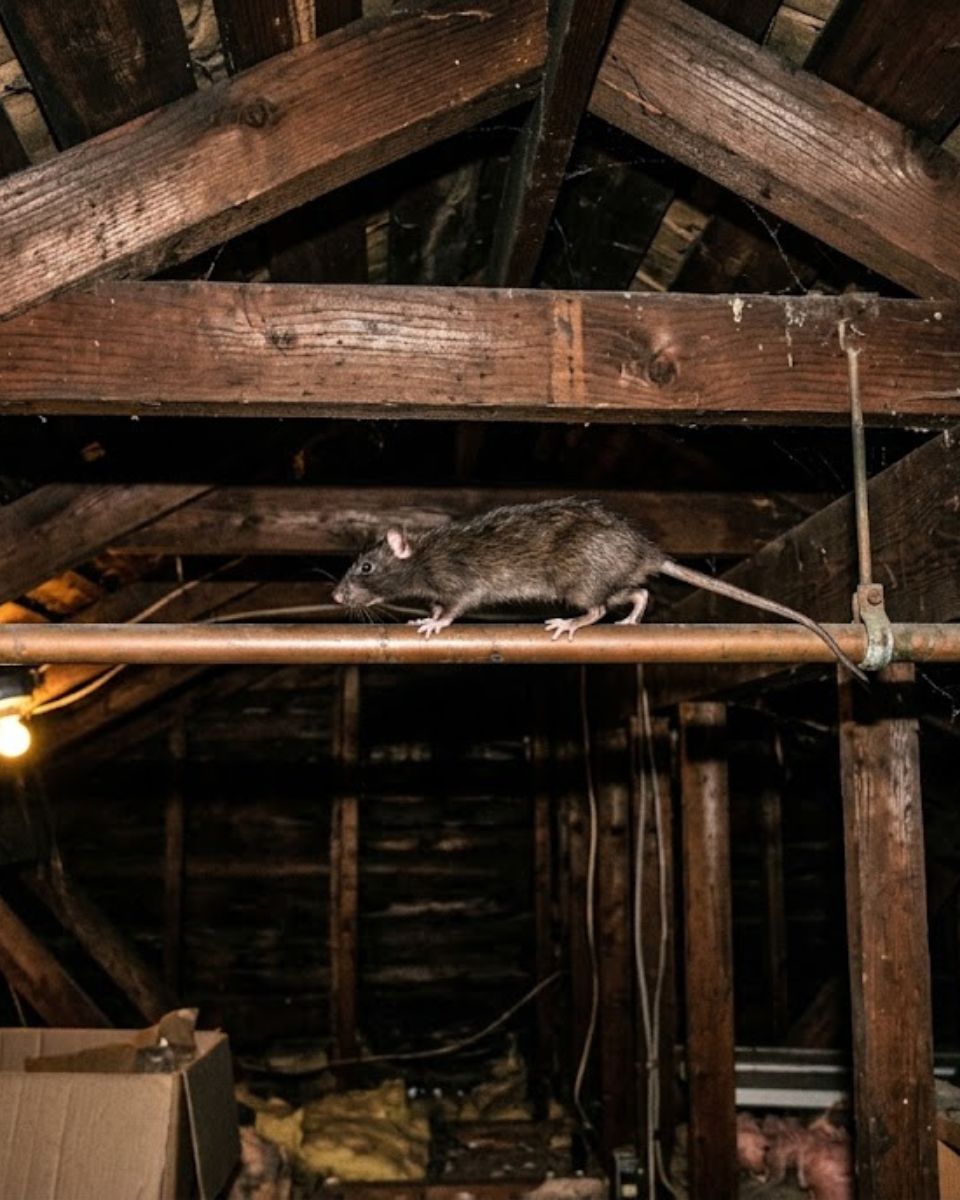
Roof rat removal in Savannah is the attic-focused trapping and exclusion work specific to Rattus rattus — the climbing rat that dominates Savannah’s tree-canopy neighborhoods. Roof rats are smaller and more agile than Norway rats, nest overhead rather than at ground level, and arrive in Savannah attics by climbing live-oak branches, palms, utility lines, and ivy-covered walls. Our roof rat programs include attic trapping, roofline exclusion sealing, canopy clearance recommendations, and exterior monitoring. Typical scope $650–$1,800 depending on attic access and exclusion work needed.
Roof rat removal is the process of clearing Rattus rattus populations from attic spaces and roofline voids, then sealing the overhead entry points — soffit returns, gable vents, and roofline gaps — that the species uses to access structures. In Savannah, roof rats travel through the live-oak canopy and reach attics directly from tree branches without touching the ground, which makes canopy management as important as the sealing work itself.
Why Savannah’s live-oak canopy creates year-round overhead roof rat access
Roof rats are Savannah’s signature rodent problem. The Historic District’s squares, Ardsley Park’s Washington Avenue oaks, Gordonston’s mature canopy, The Landings’ Skidaway Island tree cover, and Isle of Hope’s waterfront live oaks all create overhead highways that roof rats use to travel from yard to yard without ever crossing the ground. They reach attics by jumping from branches to roofs (live oaks can extend branches 30+ feet horizontally), climbing fence lines and utility lines, or running along the tops of brick walls.
Once in an attic, roof rats nest in insulation, chew through wire insulation (the fire risk most homeowners underestimate), and travel back outside to feed nightly. The peak activity period in Savannah is October through February as acorns drop and temperatures push them to seek warmer harborage, but established attic populations stay active year-round. Treating roof rats requires a different approach than Norway rats: trap placement at the roofline rather than the ground, attic-access exclusion rather than crawl-space sealing, and consideration of the tree canopy as part of the problem geometry.
What roof rat removal covers: attic inspection, trapping, roofline exclusion
- Full attic inspection with droppings mapping and runway identification
- Snap-trap placement at roofline runways, attic eaves, and active gnaw points
- Identification and photography of every roofline entry point larger than 1/4 inch
- Sealing of soffit gaps, gable vents, roof returns, and utility penetrations
- Hardware-cloth replacement on damaged or missing vent screens
- Canopy clearance recommendations — which branches to trim back from the roof
- Exterior bait station options for ongoing pressure properties
- Follow-up visit at 10–14 days to verify the attic is clear
- Documentation of work performed and remaining recommendations
How roof rat programs work from canopy assessment to attic clearance
Attic walk
Full attic inspection — droppings, runways, gnaw marks on wood, insulation disturbance, urine staining on rafters. We photograph what we find.
Find the entry
Roof rats almost always enter through a specific identifiable gap. We trace it from inside the attic out — soffit return, gable vent, utility penetration, roof-deck gap.
Trap the active population
Snap traps along active runways inside the attic. Roof rats follow predictable routes; placement matters more than trap count.
Seal the roofline
Every entry point sealed with materials appropriate to the surface — hardware cloth on vents, metal flashing on roof gaps, mortar repair on masonry.
Recommend canopy work
We point out the tree branches enabling roof access. You can hire an arborist to trim them, or leave them — but you should know which ones matter.
Cost of roof rat removal in Savannah, GA
Roof rat removal pricing depends primarily on attic access, the extent of roofline exclusion needed, and how heavy the existing population is. Historic homes with multiple attic spaces cost more than single-attic ranch houses.
| Scope | What's included | Typical range |
|---|---|---|
| Single-attic standard home | Inspection, trapping, roofline exclusion of identified entry points | $650–$1,000 |
| Multi-attic or historic home | Multiple attic spaces, complex roofline, extensive exclusion | $1,000–$1,800 |
| Heavy attic infestation | Long-established population, full attic remediation scope | $1,400–$2,800 |
| Ongoing monitoring program | Quarterly attic check + exterior stations | $60–$100/quarter |
All prices include the initial inspection, treatment, and a written summary. Final quote is provided in writing before any work begins — no surprise fees.
DIY vs. professional service
| DIY roof rat removal | Professional service | |
|---|---|---|
| Attic access | Most homeowners enter the attic once, see droppings, and leave. The actual scope of activity is missed. | Full attic mapping with photographic documentation. Every active runway and entry point identified. |
| Entry-point sealing | Visible gaps stuffed with steel wool. Hidden gaps (soffit returns, ridge vents, plumbing stacks) usually missed. | Roofline audit with binoculars from outside plus interior tracing. Every quarter-inch gap mapped and sealed. |
| Trap placement | Traps placed in the middle of the attic floor. Roof rats run along beams and rafters, not across open spans. | Traps placed along active runways on beams and at entry points. Catch rates typically 70%+ in week one. |
| Outcome | Population persists or returns inside 6–12 months. Wire-insulation damage continues during the gap. | Attic cleared in 2–3 weeks. Roofline sealed long-term. Damage stops accumulating. |
Same-Day Roof Rat Inspections Across Savannah's Live-Oak Neighborhoods
Roof rats damage wiring and insulation every night they’re in the attic. Same-day inspections across the live-oak neighborhoods.
📞 Call (912) 305-0115Roof rat questions Savannah homeowners ask most
How do roof rats get into a Savannah attic?
Most commonly through soffit-return gaps, gable vent screens that have torn or come loose, ridge vents on older roofs, gaps where dormer trim meets the roof deck, and utility penetrations (electrical service, plumbing vents, HVAC line sets). They access these from the roof, which they reach by climbing live-oak branches that overhang or touch the structure, or by running along utility lines and fence lines.
Why does my Ardsley Park home get more roof rats than my friend’s home in Pooler?
Tree canopy. Ardsley Park’s mature pecan and live-oak streets create overhead travel routes that roof rats use to reach every house in the neighborhood. Pooler’s newer subdivisions have less canopy and shorter trees relative to roofline, which limits roof rat access. Tree-canopy density correlates strongly with roof rat pressure across Savannah.
Should I cut down the live oak in my yard?
No — and we’d strongly recommend you don’t. Savannah’s live oaks are protected by city ordinance, valuable for property, and part of what makes the city what it is. What you should consider is targeted branch trimming where branches overhang or touch the roof. Most certified arborists can prune back the specific branches creating roof access without harming the tree. We identify which branches matter during inspection.
How loud are roof rats in the attic?
Loud enough to wake you. Roof rats scratching, gnawing, and running across attic rafters and ceilings sound surprisingly heavy for an animal that’s only 6–8 inches long. Peak activity is typically 30 minutes after sunset and again 1–2 hours before dawn. If you’re hearing scratching in the ceiling at night, it’s almost always roof rats — squirrels are typically active in daytime.
Will roof rats come back after the attic is cleared?
If the roofline exclusion is thorough, the same population can’t return. New populations from neighboring properties can pressure the building, but a sealed roofline prevents re-entry. Our 90-day warranty covers re-entry through any of the points we sealed. For properties with very heavy ongoing tree-canopy pressure (Forsyth Park area, Bonaventure-adjacent, mature oak streets), some customers opt for quarterly monitoring to catch new pressure early.
Can roof rats really damage my home’s electrical wiring?
Yes — wire-insulation damage is one of the most common and most underappreciated roof rat risks in Savannah. Roof rats gnaw to file their incisors, and electrical wire insulation is a frequent target. Damaged wiring creates fire risk, intermittent electrical faults, and expensive remediation. We document gnaw points on wiring during attic inspection so you can schedule electrical repair if needed.
Do you treat roof rats on Tybee Island and the Coastal Islands?
Yes — Tybee Island, Wilmington Island, Whitemarsh Island, Skidaway Island, and Isle of Hope all have roof rat pressure tied to their tree canopy and proximity to vegetation. Tybee’s beach cottages with palmetto landscaping and Skidaway’s live-oak-heavy lots both produce regular roof rat work for us. Same dispatch hours apply.
Is attic cleanup separate from removal?
Yes. Removal handles the active population and the entry-point exclusion. Attic cleanup — droppings removal, nest material removal, contaminated insulation replacement, and sanitization — is a separate scope. Most customers do removal first, then schedule cleanup once the attic is verified clear. See our attic cleanup and sanitization service for that scope.
What time of year is worst for roof rats in Savannah?
October through February typically. Acorn drop in fall coincides with cooler temperatures pushing roof rats toward warmer indoor harborage, and populations peak through the winter. March–May sees a secondary surge as breeding picks up. Summer is the lightest season for new roof-rat infestations, though established attic populations stay active year-round.
Roof rat removal works best when paired with these services
Related Savannah services: attic exclusion sealing · Savannah historic home programs · general rat control in Chatham County.
Roof Rat Removal Across Savannah’s Live-Oak Neighborhoods
Trusted Coastal Georgia rodent specialists since 2023. Same-day inspection and quote — no charge.
📞 Call (912) 305-0115